
In brief
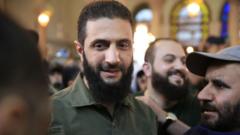
After years of conflict, Ahmed al-Sharaa emerges as the face of a politically astute regime in Syria; however, doubts linger over whether he can fulfill his pledges of inclusivity and stability while contending with both domestic and international pressures.
The Syrian civil war has left the country's political structure in disarray, with Ahmed al-Sharaa, a former rebel leader in charge of Hayat Tahrir al-Sham (HTS), now stepping into a prominent leadership role. His rise comes amidst a backdrop of skepticism as citizens question both the sincerity and intentions behind his claims of promoting tolerance and inclusivity. Initially perceived as a fading regime, Bashar al-Assad's government appeared too weakened to maintain control, relying heavily on allied forces from Russia, Iran, and Hezbollah. Many expected a war-weary populace, still reeling from years of conflict, to rally behind al-Sharaa’s leadership rather than a disheveled Assad. Yet, in a surprising turn reminiscent of earlier conflicts, following setbacks like the fall of Homs, the regime's opposition has found itself inexplicably celebrating newfound power, further exposing Assad's declining influence. Al-Sharaa, whose past as a jihadist has led to mistrust, has vowed to lead a new political era rooted in "Syrian religious nationalism." He emphasizes his commitment to women’s education, highlighting high female enrollment in universities in his stronghold of Idlib. Nevertheless, his tacit avoidance of questions regarding stricter dress codes highlights the cultural tensions lying beneath his statements. He has been candid about the challenges confronting a country decimated by war and displacement. “Half the population has been forcibly displaced,” he stated, acknowledging the urgent need for sanctions against Syria to be lifted for any recovery to take place. However, he also faces hurdles as HTS remains labeled internationally as a terrorist organization. Shift in perception is critical, but his critics note that the power dynamics in a possibly new constitution remain under his control.As al-Sharaa looks towards the future, he must navigate a complex interplay of hope and skepticism from a populace desperate for peace in a country torn by years of turmoil. There's a cautious call for reconciliation and rebuilding from many Syrians, but the war has intricately woven a fabric of distrust and fragility within the very social order he aims to restore. With neighboring powers and ongoing military operations threatening stability, al-Sharaa's leadership is poised on a knife's edge, with the potential for a volatile reaction from remnants of the Islamic State and growing frustration in the populace over past grievances. As he must not only garner trust locally but also engage with global powers in the quest for stability, the world watches closely, pondering whether this new leadership can lead towards genuine healing or if it will merely perpetuate cycles of conflict.
