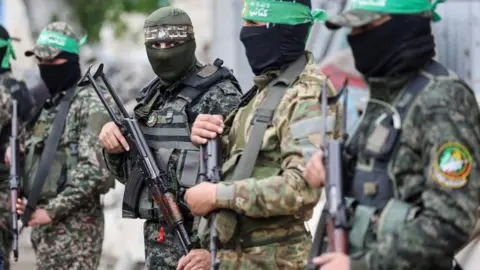
The leaders of the Democratic Republic of Congo and Rwanda have signed a peace deal aimed at ending the long-running conflict in the region at a summit hosted by US President Donald Trump in Washington. Ahead of the summit, there was an escalation in fighting in resource-rich eastern DR Congo between government forces and rebels believed to be backed by Rwanda. DR Congo's army accused its rivals of attempting to sabotage the peace process, but the M23 rebels said the army had launched an offensive in breach of a ceasefire.
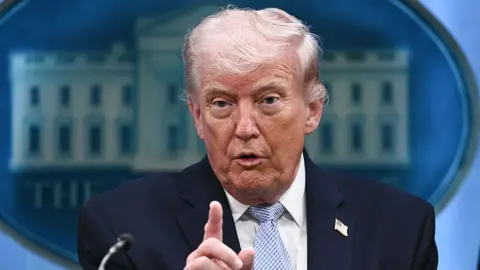
At the start of the year, the M23 seized large parts of eastern DR Congo in an offensive that saw thousands killed and many more forced from their homes. At the beginning of the event at the newly-renamed Donald J Trump Institute of Peace, Trump said the peace ceremony was a great day for Africa and the world. I have a lot of confidence in both leaders, Trump added. We'll keep these commitments. I know they're going to keep them and follow through on the agreement and create a much brighter future for the people of their countries.
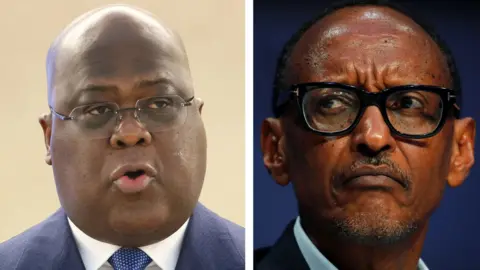
DR Congo's President Felix Tshisekedi and his Rwandan counterpart Paul Kagame have frequently exchanged insults in recent years, each accusing the other of starting the conflict. Trump had previously facilitated a peace accord in June, which Tshisekedi and Kagame have now endorsed, along with several other African leaders who attended the signing ceremony.
At the event, Kagame praised Trump as an even-handed leader, stating that as a result of his engagement, they have the clearest path forward. Nevertheless, skepticism remains about the agreement's potential impact on the ongoing violence, especially with the M23 rebellion continuing to expand control.
The conflict's roots lie deeply in the region's mineral wealth, with the US hoping the peace deal will attract their businesses to invest in one of the world's richest sources of minerals, including cobalt and lithium. However, substantive progress towards resolving the root causes of conflict, such as the presence of Rwandan troops in eastern Congo and the future status of the M23, remains a critical issue. As analysts note, while the signing is a hopeful step, real change will require persistent diplomatic efforts and accountability from both nations.
At the start of the year, the M23 seized large parts of eastern DR Congo in an offensive that saw thousands killed and many more forced from their homes. At the beginning of the event at the newly-renamed Donald J Trump Institute of Peace, Trump said the peace ceremony was a great day for Africa and the world. I have a lot of confidence in both leaders, Trump added. We'll keep these commitments. I know they're going to keep them and follow through on the agreement and create a much brighter future for the people of their countries.
DR Congo's President Felix Tshisekedi and his Rwandan counterpart Paul Kagame have frequently exchanged insults in recent years, each accusing the other of starting the conflict. Trump had previously facilitated a peace accord in June, which Tshisekedi and Kagame have now endorsed, along with several other African leaders who attended the signing ceremony.
At the event, Kagame praised Trump as an even-handed leader, stating that as a result of his engagement, they have the clearest path forward. Nevertheless, skepticism remains about the agreement's potential impact on the ongoing violence, especially with the M23 rebellion continuing to expand control.
The conflict's roots lie deeply in the region's mineral wealth, with the US hoping the peace deal will attract their businesses to invest in one of the world's richest sources of minerals, including cobalt and lithium. However, substantive progress towards resolving the root causes of conflict, such as the presence of Rwandan troops in eastern Congo and the future status of the M23, remains a critical issue. As analysts note, while the signing is a hopeful step, real change will require persistent diplomatic efforts and accountability from both nations.