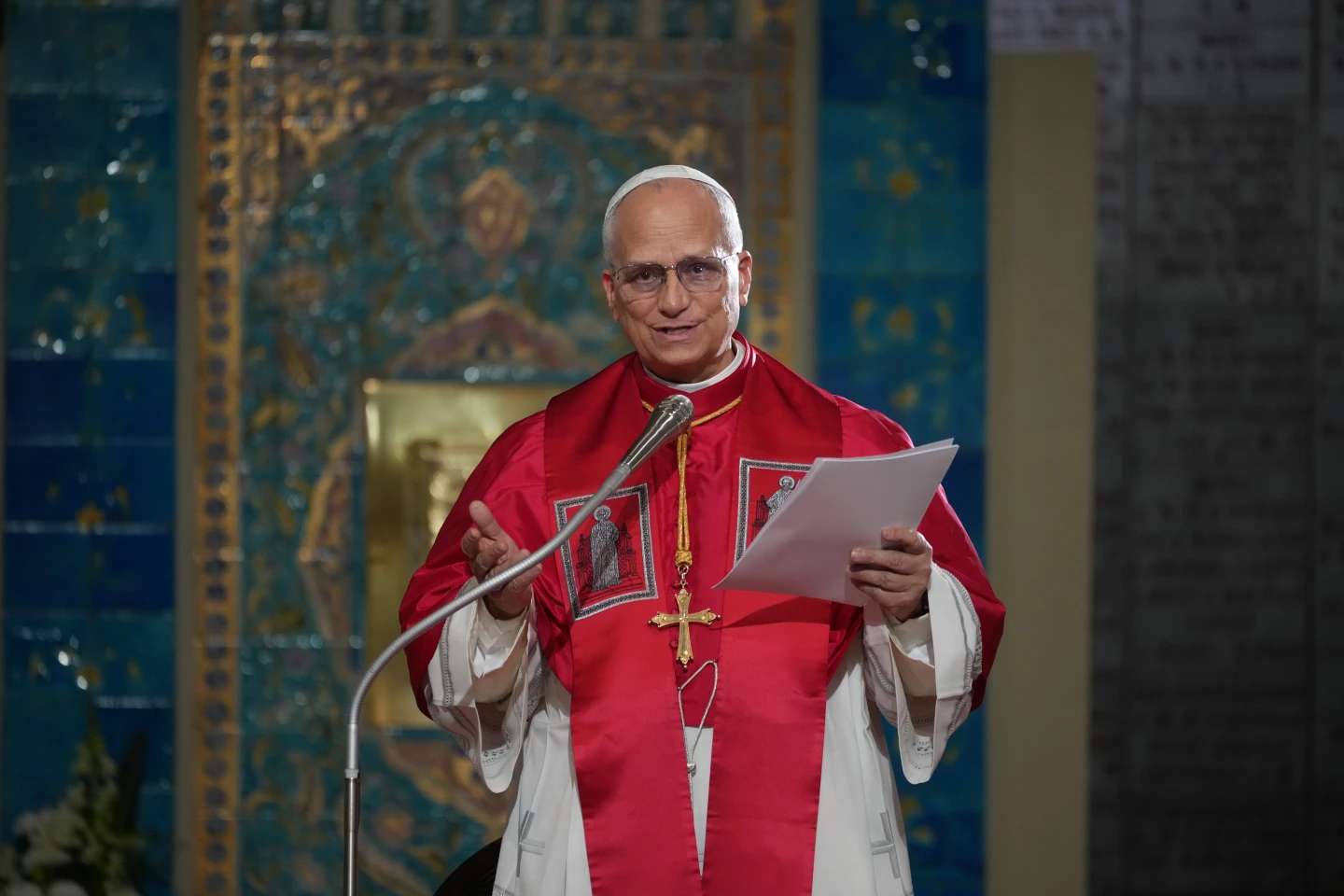
WASHINGTON (AP) – President Donald Trump's presidential victory in 2024 received overwhelming support from U.S. Catholic voters. However, a wave of discontent has emerged across the Catholic political spectrum regarding Trump's unprecedented verbal assault on Pope Leo XIV, the first American Pope. In response to criticisms surrounding the ongoing war, Pope Leo emphasized his mission of peace rather than targeting Trump directly.
Notable figures such as Archbishop Paul Coakley, head of the U.S. Conference of Catholic Bishops, and Bishop Robert Barron called out Trump’s rhetoric as ‘entirely inappropriate and disrespectful.’ This sentiment has also resonated with many conservative evangelical leaders, who expressed concern over Trump's portrayal of himself as a savior-like figure in an image shared across social media platforms.
Following backlash, notably by David Brody of the Christian Broadcasting Network, Trump eventually removed the image from his Truth Social account, asserting that there was no intention to liken himself to Jesus. The president firmly stated, 'There’s nothing to apologize for. He’s wrong.' This confrontation with religious communities is strategically critical as voting for the midterms approaches, given that Trump's political success strongly hinges on the support of the religious right.
While many in Trump's base remain loyal, experts like political science professor David Campbell note a potential shift if loyalty towards Trump overshadows allegiance to the Pope. 'This is unprecedented criticism of a Pope from a U.S. president,' Campbell stated, highlighting a pivotal moment in contemporary U.S. religious and political history.
Furthermore, some evangelical leaders openly criticized Trump's actions, noting the importance of public condemnation against behaviors perceived as disrespectful to religious figures. The call for Trump to offer humility in the face of this controversy stands as a significant point of contention among his supporters as the election season unfolds, offering insight into the evolving dynamics between faith and politics in America.
Notable figures such as Archbishop Paul Coakley, head of the U.S. Conference of Catholic Bishops, and Bishop Robert Barron called out Trump’s rhetoric as ‘entirely inappropriate and disrespectful.’ This sentiment has also resonated with many conservative evangelical leaders, who expressed concern over Trump's portrayal of himself as a savior-like figure in an image shared across social media platforms.
Following backlash, notably by David Brody of the Christian Broadcasting Network, Trump eventually removed the image from his Truth Social account, asserting that there was no intention to liken himself to Jesus. The president firmly stated, 'There’s nothing to apologize for. He’s wrong.' This confrontation with religious communities is strategically critical as voting for the midterms approaches, given that Trump's political success strongly hinges on the support of the religious right.
While many in Trump's base remain loyal, experts like political science professor David Campbell note a potential shift if loyalty towards Trump overshadows allegiance to the Pope. 'This is unprecedented criticism of a Pope from a U.S. president,' Campbell stated, highlighting a pivotal moment in contemporary U.S. religious and political history.
Furthermore, some evangelical leaders openly criticized Trump's actions, noting the importance of public condemnation against behaviors perceived as disrespectful to religious figures. The call for Trump to offer humility in the face of this controversy stands as a significant point of contention among his supporters as the election season unfolds, offering insight into the evolving dynamics between faith and politics in America.