In a wood on the edge of St Petersburg they are reading out a list of names. Each name is a victim of the Soviet dictator Joseph Stalin's Great Terror. In this part of Russia, thousands of lives are remembered on the annual Remembrance Day for Victims of Political Repression. Buried in the Levashovo Wasteland are believed to be at least 20,000 people - possibly as many as 45,000 - who were denounced, shot, and disposed of in mass graves during the 1930s purge.
As present-day Russian authorities increasingly glorify Stalin as a victorious wartime leader, dissenting voices are silenced. This is evident in the case of Diana Loginova, an 18-year-old music student and lead singer of the band Stoptime. Diana has faced multiple arrests for organizing street concerts featuring songs critical of the Kremlin and the ongoing war in Ukraine.
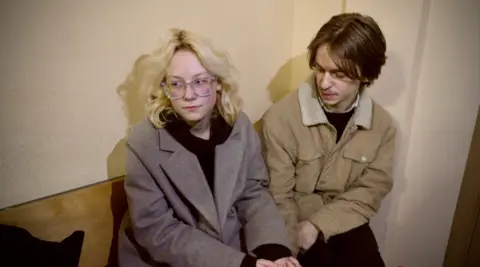
On entering Leninsky District Courthouse, Diana arrives in a police vehicle, her anxious mother waiting for her inside. After spending 13 days in jail, Diana was sentenced to additional time following accusations related to her performances, particularly for obstructing pedestrian access. Despite this, she insists that her only intention was to share music while bringing people together.
Diana's band has employed songs from exiled Russian artists like Noize MC and Monetochka, music now deemed subversive. Videos of their performances have drawn crowds of young supporters, showcasing the resilience of youth culture in the face of oppressive laws that threaten their freedom of expression.
The crackdown on dissent extends beyond Diana, impacting other artists who fear similar consequences and arrest. As civil society in Russia faces excessive pressure, Diana and her supporters express solidarity, emphasizing that their struggle is about more than just music; it's about the essence of free expression.
Among those echoing similar sentiments is Ludmila Vasilyeva, an 84-year-old survivor of the Leningrad siege. She continues to speak out against Russia's war in Ukraine, even receiving fines for her efforts. Her defiance exemplifies the resistance spirit seen among a small but brave segment of the population, who head to the streets demanding peace and justice.
In a chilling autumn evening, the music plays on the streets of St. Petersburg, bringing with it hope and a longing for change, despite the looming threat of repression.
As present-day Russian authorities increasingly glorify Stalin as a victorious wartime leader, dissenting voices are silenced. This is evident in the case of Diana Loginova, an 18-year-old music student and lead singer of the band Stoptime. Diana has faced multiple arrests for organizing street concerts featuring songs critical of the Kremlin and the ongoing war in Ukraine.
On entering Leninsky District Courthouse, Diana arrives in a police vehicle, her anxious mother waiting for her inside. After spending 13 days in jail, Diana was sentenced to additional time following accusations related to her performances, particularly for obstructing pedestrian access. Despite this, she insists that her only intention was to share music while bringing people together.
Diana's band has employed songs from exiled Russian artists like Noize MC and Monetochka, music now deemed subversive. Videos of their performances have drawn crowds of young supporters, showcasing the resilience of youth culture in the face of oppressive laws that threaten their freedom of expression.
The crackdown on dissent extends beyond Diana, impacting other artists who fear similar consequences and arrest. As civil society in Russia faces excessive pressure, Diana and her supporters express solidarity, emphasizing that their struggle is about more than just music; it's about the essence of free expression.
Among those echoing similar sentiments is Ludmila Vasilyeva, an 84-year-old survivor of the Leningrad siege. She continues to speak out against Russia's war in Ukraine, even receiving fines for her efforts. Her defiance exemplifies the resistance spirit seen among a small but brave segment of the population, who head to the streets demanding peace and justice.
In a chilling autumn evening, the music plays on the streets of St. Petersburg, bringing with it hope and a longing for change, despite the looming threat of repression.