In brief
In the swing state of Michigan, electric vehicles are at the center of a heated political debate, as Trump attacks the push towards electrification while Harris seeks to reassure voters. With the state's 16 electoral votes up for grabs, Trump is leveraging fears about job losses in the auto industry to gain support, while Harris counters that her policies won't mandate electric vehicles. The battle for Michigan's influential auto workers is crucial, as recent polls show a tight race between the candidates.
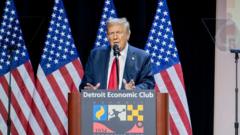
---A key battleground in the upcoming U.S. election is Michigan, where the topic of electric vehicles (EVs) is fueling a heated debate between former President Donald Trump and Vice President Kamala Harris. With Michigan possessing 16 coveted electoral votes, both candidates are keen to sway auto workers, many of whom are apprehensive about a shift to electrification potentially threatening their jobs.During a recent appearance in Detroit, Trump criticized the United Auto Workers' support for EVs, suggesting that it could be detrimental to the auto industry. This rhetoric seems to resonate with several Michigan residents, including Doug, an auto worker who fears the loss of jobs due to the transition to EVs. Doug, a former Democrat, embodies the type of voter Trump is hoping to win over, while Harris seeks to regain their support.Countering Trump's claims at a rally in Flint, Harris emphasized her administration’s non-mandate stance on car types, despite earlier supporting a phase-out of petrol vehicles during her 2019 presidential run. She reassured voters, underscoring personal choice in vehicle ownership as central to her policy.Harris faces a challenge in Michigan, as reflected by recent polls indicating a narrow lead for Trump. This complexity is furthered by Trump’s association with Tesla founder Elon Musk, an EV advocate, juxtaposed with attempts to win over the auto industry labor force traditionally aligned with Democrats.Experts highlight that this contest over vehicle electrification plays into broader economic concerns in the state. Despite significant federal investment, including $1.7 billion to support Michigan's auto industry transition, skepticism about the benefits remains.Auto industry leaders like Kevin Moore of the Teamsters, who supports Harris, argue that both gas and electric vehicles can coexist without job loss. Despite Trump's critique, many industry insiders believe that the transition is inevitable but requires nuanced handling and investment in infrastructure.Ultimately, the outcome in Michigan will hinge on which candidate manages to convince the state’s influential auto workers and undecided voters that their economic security is a priority in the evolving automotive landscape.