In brief
Authorities are investigating the incident, with a focus on potential criminal negligence, as a rescue operation unfolds amidst bad weather conditions.
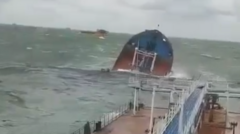
Two oil tankers flagged under Russian ownership have sustained serious damage in the Black Sea, leading to a substantial oil spill, as confirmed by Russian officials. Reports from Russia's Southern Transport Prosecutor's Office reveal footage showing the bow of one vessel completely severed, with oil streaking across the water's surface. The two tankers, reportedly owned by Volgatanker, are believed to have run aground after drifting offshore. Tragically, at least one crew member is said to have died in the wreckage. The incident occurred in the strategically important Kerch Strait, which serves as a vital link separating Russia from the Ukrainian peninsula of Crimea—a territory annexed by Moscow in 2014.A rescue operation that involved tugboats, helicopters, and over 50 emergency personnel initially succeeded in evacuating 13 crew members from one of the damaged vessels. However, efforts were halted due to deteriorating weather conditions. Meanwhile, the remaining 14 crew members from the second tanker are reported to have adequate life-support resources on board but may remain stranded until weather improves.In response to this incident, Russian President Vladimir Putin has established a working group led by Deputy Prime Minister Vitaly Savelyev to address the situation. Investigations are currently underway to determine whether criminal negligence played a role in this maritime disaster.Analyst Michelle Bockmann from Lloyd's List noted that each of the affected tankers was relatively small, carrying roughly 4,300 dead weight tonnes of oil—far less than the standard capacity of larger vessels used for international crude oil trade. The Kerch Strait also plays a crucial role in the transportation of Russian grain, crude oil, fuel oil, and liquefied natural gas.This unfortunate incident echoes a 2007 occurrence when another vessel, Volgoneft-139, split apart during adverse weather, resulting in the spillage of over 1,000 tonnes of oil. Following the Kremlin's full-scale invasion of Ukraine in February 2022, Russian oil imports have faced rigorous sanctions from Western allies. Recently, allegations have emerged accusing Russia of employing a fleet of poorly maintained tankers to evade sanctions; however, Bockmann pointed out that the tankers involved in the latest incident did not appear to belong to that fleet.