
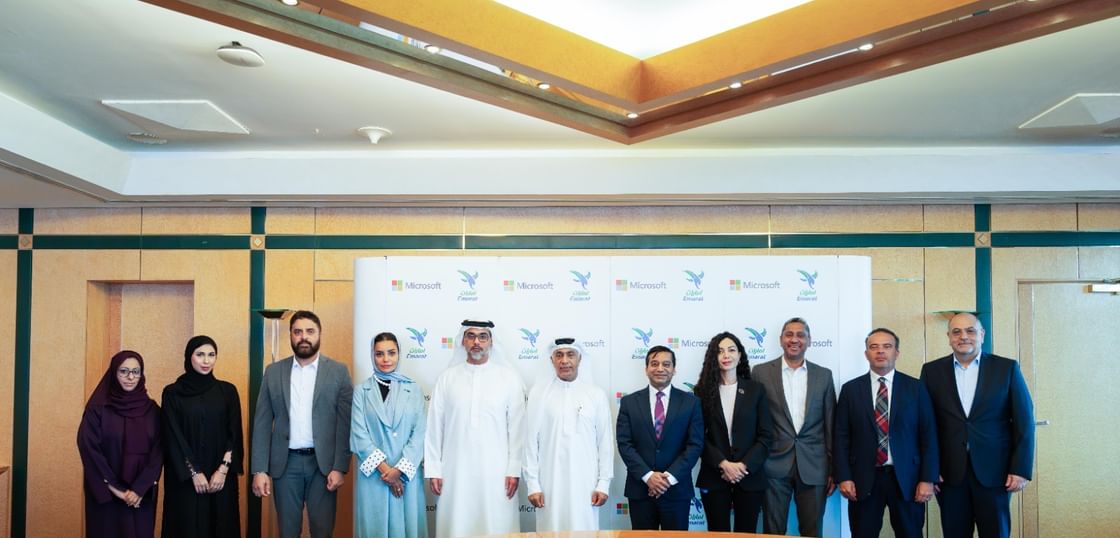
Emarat, the UAE’s leading petroleum company, announced a Memorandum of Understanding with Microsoft on Wednesday, October 28, 2026, to investigate how artificial intelligence can boost workforce productivity and build enterprise readiness across the organisation. The partnership is part of the broader national effort to position the country as a global leader in artificial intelligence.
The UAE National AI Strategy 2031, released by the government, calls for a secure, responsibly governed adoption of AI across public and private sectors. Emarat’s MoU aligns with that agenda by focusing on governance frameworks, data protection, and workforce upskilling to support the next phase of digital transformation in the oil and gas industry.
Emarat is considered a pioneer in the UAE’s oil and gas sector, often leading in operational efficiency and technological innovation. The company’s new focus is to embed AI‑driven tools in daily operations to improve decision‑making, streamline processes, and enable better collaboration among employees. The added emphasis on secure adoption reflects an awareness of the need for robust data governance and ethical use of AI technologies.
Microsoft’s Role in AI Governance and Workforce Transformation
The Memorandum outlines a joint effort to explore how Microsoft’s suite of cloud and AI products can support Emarat’s productivity objectives. Microsoft plans to provide high‑level guidance, best‑practice frameworks, and awareness sessions that highlight productivity transformation opportunities. These sessions will help Emarat staff understand the potential of AI assistants, automation workflows, and data‑driven insights while maintaining compliance with national regulations.
Part of the collaboration is to assess priority business scenarios where AI agents and automation could deliver measurable value. By “AI agents,” Microsoft refers to software robots or virtual assistants that can perform routine tasks, analyse data, and offer insights to employees without compromising security or privacy standards. Automation, meanwhile, will target repetitive technical tasks within Emarat’s operational pipelines, enabling human workers to focus on higher‑value decision work.
Secure, responsible, and governed AI deployment is a central pillar of the MoU. Emarat and Microsoft will jointly develop governance structures that address risk, bias, and transparency concerns while ensuring that AI tools can be assessed and audited according to industry best practices. The aim is to build a framework that supports not only immediate productivity gains but also long‑term business value.
Burhan Al Hashemi, Chief Executive Officer of Emarat, said in a statement that “At Emarat, we are focused on creating the conditions for our workforce to understand, adopt and benefit from emerging technologies in a secure and responsible way. Our collaboration with Microsoft gives us a structured framework to explore how AI can strengthen productivity, decision‑making and long‑term business value. This is part of our ambition to build a more adaptive organisation and contribute to the UAE’s progress towards an AI‑enabled economy.”
Kethan Parbhoo, General Manager, Small, Medium Enterprises and Channel (SME&C), Central Europe, Middle East and Africa, added that “AI transformation is ultimately about empowering people and redesigning how work gets done. Emarat is taking a thoughtful approach to building the skills, governance and technology foundations needed to adopt AI securely and responsibly. Together, we aim to help unlock new levels of productivity and innovation while supporting the UAE’s ambition to build an AI‑enabled economy.”
In summary, the MoU represents a significant step for Emarat’s digital journey, aligning operational readiness with national AI objectives. By leveraging Microsoft’s expertise in AI governance and workforce empowerment, the company aims to use technology as a catalyst for productivity and innovation while safeguarding employee interests and data security across its global operations.
