In brief
At the fourth ENACT Majlis in Abu Dhabi, leaders from energy, technology, investment, and policy sectors emphasized the need for robust and intelligent energy systems. Analysis highlighted a sixfold rise in physical attacks on infrastructure and a doubling of cyberattacks in recent years. The event promoted AI and robotics investment as a pathway to resilience and economic stability, positioning the UAE as a global convening hub for these conversations.
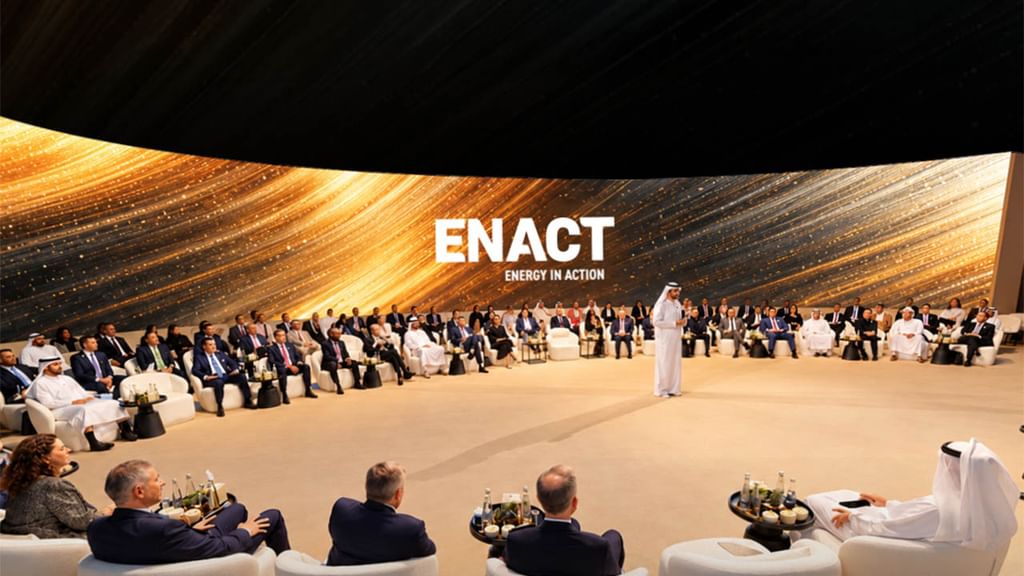
The fourth ENACT Majlis, held on Sunday in Abu Dhabi, converged more than 100 global leaders to focus on strengthening international energy resilience through strategic investment in infrastructure, artificial intelligence (AI), and cross‑sector partnerships. The event, hosted by the United Arab Emirates in partnership with ADNOC, XRG and Masdar, aims to translate dialogue into actionable investment solutions and reinforce the UAE’s role as a global convening hub for energy, technology and investment.
According to new analysis produced by ENACT, the world has seen a dramatic increase in vulnerabilities affecting energy systems. Physical attacks on energy infrastructure have risen sixfold over the past six years, while cyberattacks have doubled in the last two, underscoring the need for investment in preparedness and resilience before failure occurs. The study suggests that integrating advanced technologies can help systems anticipate, adapt, and recover more rapidly from shocks.
Energy Security as Economic Stability
Dr Sultan Ahmed Al Jaber, Minister of Industry and Advanced Technology and Executive Chairman of XRG, highlighted the intrinsic link between energy security and economic stability: “Energy security is economic stability. As global energy demand grows and disruption increases, we need systems that can deliver more energy, more reliably, and perform under pressure.” He added that this requires “investing in capacity, flexibility and the intelligence to anticipate, adapt and recover faster.”
Al Jaber’s remarks resonate with ENACT’s central thesis that resilience should be embedded directly into investment decisions and infrastructure planning. He emphasized that “this year’s ENACT Majlis will advance collective, cross‑sector action to place resilience at the heart of investment decisions, accelerate the deployment of AI and robotics, and strengthen partnerships that enhance energy security and support socioeconomic growth.”
AI and Robotics as Transformation Drivers
Artificial intelligence and robotics are positioned at the core of the discussion, seen as enablers for building smarter, more adaptive energy systems. By integrating AI into grid management, operators can predict fluctuations in demand, detect anomalies early, and orchestrate dynamic responses that mitigate cascading failures. Robotics, meanwhile, are expected to play a key role in rapid inspection, maintenance and repair, reducing downtime and improving asset longevity.
ENACT’s framework proposes that investment in AI should target both the physical layer of energy networks and the cyber‑intelligence required to secure them from evolving threats. The combination of predictive analytics and real‑time control is said to create a resilient system that can “deliver more energy, more reliably, and perform under pressure,” echoing Al Jaber’s call for intelligence-driven flexibility.
Cross‑Sector Partnerships and Global Diffusion
The Majlis is designed to foster cross‑sector partnerships that bridge energy, technology, investment and policy communities. ENACT’s model, rooted in the Emirati Majlis tradition of trusted and constructive dialogue, seeks to translate insights into practice by facilitating direct connections between stakeholders. Since its inception in Abu Dhabi in 2024, the platform expanded to Washington, D.C. before returning to its home base, enabling a broader global outreach.
Collaborations with ADNOC, XRG and Masdar are central to the event, providing a proving ground for innovative projects and demonstrating how public‑private cooperation can unlock critical investments in infrastructure and AI capabilities.
Investment Priorities and Actionable Solutions
Investors are encouraged to focus on projects that enhance system flexibility, such as decentralized micro‑grids and storage solutions that can absorb intermittent renewable output. Funding mechanisms that incentivize early adoption of AI‑driven predictive maintenance are also emphasized, aiming to lower operational costs and extend asset life.
ENACT released a policy brief outlining priority areas for investment, including: 1) building cybersecurity resilience for grid operators; 2) deploying AI for predictive load balancing; and 3) expanding research into robotic inspection techniques. The brief calls for coordinated international efforts to align regulatory frameworks, share best practices, and create a shared data repository to accelerate AI model development.
“We need systems that can deliver more energy, more reliably, and perform under pressure,” Al Jaber reiterated, stressing that resilience must be a guiding principle in all investment decisions. The Majlis’s outcome is expected to materialize in a series of joint initiatives that provide investors with clear, investable pathways to meet the emerging demands of an energy‑intensive global economy.
The global energy community’s consensus, as reflected in the Majlis, is that without a robust investment strategy grounded in AI and resilience, supply chains risk interruption, economic instability, and prolonged recovery times. By spotlighting actionable investment solutions, the fourth ENACT Majlis aims to set a precedent for future dialogues that champion technological readiness and collaborative resilience.