
In brief
A magnitude 5.2 earthquake has prompted concerns on Santorini, leading to evacuations and a government state of emergency. With ongoing seismic activity affecting the region, preparations ramp up for potential larger quakes or volcanic occurrences.
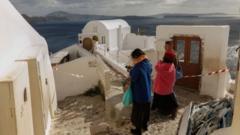
The Greek island of Santorini is under a state of emergency after several earthquakes in recent days, with the latest tremor registering at a magnitude of 5.2. The earthquake, occurring on Wednesday at 21:09 local time, was the strongest recorded in the series and took place at a depth of approximately 5 kilometers (3.1 miles). The emergency declaration will remain in effect until March 3, aimed at addressing urgent needs and managing the evolving situation, as local officials indicated.As a precaution, authorities have facilitated the evacuation of over 11,000 individuals, primarily residents and seasonal workers, due to the ongoing tremor activity. Recent seismic events included a 4.7 magnitude quake recorded south-west of Amorgos earlier Thursday, following numerous smaller quakes throughout the night. While substantial damage has yet to be reported on the island, officials are bracing for potential severe quakes.Greek Prime Minister Kyriakos Mitsotakis is slated to visit Santorini to assess the situation. According to Vasilis Karastathis, the director of the Geodynamic Institute, seismic activity remains significant and continues to prompt concern. Their predictions suggest that seismic events may persist without signs of diminishing activity.The island of Santorini, a popular tourist destination, is currently experiencing low visitor numbers, leading to a higher proportion of locals among those evacuated. The state of emergency allows for immediate repairs on critical infrastructure without the usual bureaucratic delays. Experts, including professor Costas Synolakis, caution that the region remains in a precarious phase, with the potential for more serious geological events or a volcanic crisis reminiscent of historical eruptions.In preparation for emergencies, additional generators and a backup communications center have been established. The islanders have expressed concerns regarding tsunami threats, resulting in makeshift defenses at vulnerable coastal points. Hospital staff are on standby, ready to assist those who chose not to evacuate, with extra medical personnel and resources arriving from surrounding islands.Poor weather is complicating evacuation logistics, leading to delays at ferry routes due to unsafe sea conditions. Schools across Santorini and neighboring islands remain closed until officials can decide on a safe reopening. In light of the evolving situation, the Thira Chamber of Commerce has encouraged businesses to halt operations and implement supportive measures akin to those adopted during the COVID-19 pandemic.Santorini is situated on the Hellenic Volcanic Arc, a seismically active region, though recent authorities state that the tremors are linked to tectonic movements rather than volcanic activity. Although precise predictions of earthquakes remain elusive, the historical prevalence of seismic activity in the area mandates ongoing vigilance and preparedness for local governments.


