
In brief
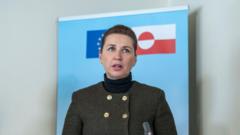
Amidst Donald Trump's declarations regarding Greenland, Danish officials are cautiously responding while avoiding escalation. Prime Minister Mette Frederiksen emphasizes Greenland's autonomy, stating its destiny lies with its people, despite rising tensions and fears of economic impact stemming from potential U.S. tariffs and military threats.
As the cold January winds sweep through Copenhagen, the atmosphere among Denmark’s policymakers is anything but warm. There is heightened concern following Donald Trump’s recent comments suggesting a desire to buy Greenland, provoking fears of punitive tariffs against Denmark if it obstructs such ambitions. "This situation is taken very seriously," stated Denmark’s Foreign Minister Lars Løkke Rasmussen, affirming a measured approach to avoid a “war of words” with the United States. Prime Minister Mette Frederiksen has attempted to downplay the military undertones suggested by Trump, insisting that her government does not foresee any aggressive actions being taken. "I cannot envision that it will ever lead to anything of that sort," she stated in a recent TV interview. Lars Sandahl Sorensen, a prominent figure in Danish Industry, echoed this sentiment, claiming that there’s no appetite for a trade war.Despite public calls for calm, behind the scenes, a flurry of urgent meetings focused on the crisis has taken place in Copenhagen. Greenland's Prime Minister Mute B Egede made a significant visit to meet with Danish leaders, while party heads congregated for an extraordinary session in parliament. In her statements, Frederiksen has emphasized the close ties between Denmark and the U.S., referring to America as "Denmark’s closest partner." However, she also firmly stated that any decisions about Greenland's future are for its residents to determine, remarking, "Greenland belongs to the Greenlanders."Frederiksen's diplomatic strategy seems informed by past experiences. Her handling of the situation is cautious, especially recalling the fallout from 2019 when her dismissal of Trump’s Greenland purchase proposal led to his abrupt cancellation of a state visit. Veteran journalist Erik Holstein reflected on this incident, suggesting that a different normal may now exist with Trump prevailing in U.S. politics.Moreover, the issue of Greenland's autonomy has become increasingly sensitive. Greenland’s population, increasingly inclined towards independence and cultural revitalization, finds itself at a crossroads. The Greenlandic Prime Minister Egede has raised the banner of decolonization, suggesting that the territory must break free from past injustices and colonial ties. The prospect of a successful independence referendum looms, yet this newfound freedom could present its own challenges. Greenland’s economy currently yields a substantial dependency on Danish financial support—over 60% of its funding. Social Democrat MP Karsten Honge elucidates the complexities ahead, noting independence might necessitate significant adjustments, especially concerning economic survival.Opposition leaders like Rasmus Jarlov criticize Frederiksen's response as lacking decisiveness, calling for a clearer stance against U.S. intentions. He described Trump’s remarks as "unprecedentedly disrespectful" towards an ally. Greenland's self-governance may hinge more towards independence, especially as inhabitants express growing national identity and autonomy.On the diplomatic front, leaders from EU nations have begun to voice their concerns regarding the implications of Trump’s ambitions towards Greenland. German Chancellor Olaf Scholz emphasized the need to respect national borders, highlighting collective European apprehension about potential U.S. policy disruptions. The apprehensions extend to the Danish economy as well, where analysts caution that tariffs could significantly hinder economic stability.With Trump's presidency re-emerging on the horizon, the Danish government is bracing itself for turbulent relations. As influencers within Denmark navigate these complexities, there exists a hint of optimism that the focus might shift as the new administration settles in. However, the discomfort lingers, underscoring the weight of global politics on such delicate matters as Greenland's fate. "Whatever decisions the U.S. makes will ultimately affect Denmark," Honge observed, emphasizing that no lighthearted approach can be adopted in face of the evolving geopolitical landscape.


