In brief
After the October 27 election, President Isaac Herzog officially assigned National Security Minister Yair Eisenkot the responsibility to assemble a coalition government within 28 days. Eisenkot pledged to build a “wide” government quickly, with options ranging from a minority parliament to a unity cabinet with Netanyahu. Analysts note the challenges of forging a coalition amid deep political fragmentation and external security pressures.
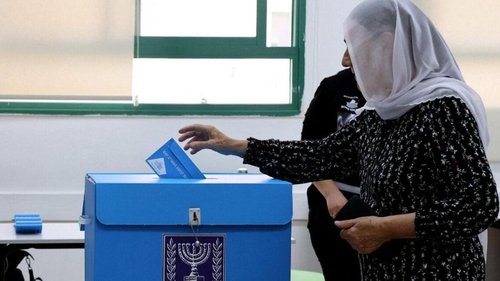
In a decisive move to address Israel’s political stalemate, President Isaac Herzog on 8 November assigned former National Security Minister and ex‑military chief Gadi Eisenkot the task of forming a new government. Denver’s mandate follows the Parliament’s October 27 election, which left both Eisenkot’s centrist Yashar‑aligned bloc and Prime Minister Benjamin Netanyahu’s right‑wing coalition short of the 61 seats required for an outright majority in the 120‑member Knesset.
The election results produced a 48‑seat Yashar‑led alliance for Eisenkot and a 53‑seat camp for Netanyahu, while a record 19 seats were captured by Arab‑led parties representing Palestinian citizens of Israel. Neither side could cross the threshold, and critics described the situation as a “critical moment” in which Israel’s democracy faced deep uncertainty. Eisenkot’s announcement underscored the urgency, saying, “If we continue on the current path, we risk reaching a point of no return.”
Coalition Strategies
Eisenkot has outlined three conceivable routes to power. First, he could lead a minority cabinet that would rely on the consistent support of the Arab parties for key votes, though he explicitly rejected a coalition with them. Second, he could seek to bring the two ultra‑Orthodox parties – United Torah Judaism and Shas – into a ministry‑sharing deal, which would bring the Yashar bloc up to precisely 61 seats. Third, he could reconvene with Netanyahu in a unity government, a possibility that he has left on the table in the hope of rapid stabilization. Eisenkot told reporters that “this will require creative and unconventional political steps,” and that “we must form a national emergency government.”
Herzog’s public briefing emphasized the role of stability in the face of geostrategic challenges. He noted that the United States’ November 3 midterm elections had produced a “new political reality” that could affect Israel’s international alliances. “The State of Israel needs a stable government,” Herzog said, pointing to “unprecedented political uncertainty” and “the need to navigate the threat of an Iranian attack” while also addressing the Gaza conflict. Eisenkot echoed her concerns, referencing the “immense challenges” facing “a democracy at a vulnerable moment.”
Amid these strategic calculations, Eisenkot has invited both Netanyahu’s Likud party and the far‑right Religious Zionist Party, led by Finance Minister Bezalel Smotrich, to join a coalition under his stewardship. “If members of Likud and the Religious Zionist Party truly believe this is a time for unity,” Eisenkot said, “I cannot conceive of any reason why they would not support a government under my leadership.” Al Jazeera reported that Eisenkot’s invitation included “creative, inclusive” measures aimed at all constituencies and that he is “open to including Prime Minister Benjamin Netanyahu in the next government.”
The clock is tight. Herzog has granted Eisenkot 28 days to form a cabinet, with the option of a 14‑day extension if a vote of confidence cannot be secured. Should Eisenkot fail to secure a majority, the mantle would shift back to Netanyahu, who is still the caretaker primus inter pares until a new government takes office. If both parties reach an impasse, a fresh election could be called, further prolonging the state of uncertainty that the president warned could bring Israel “to the brink of an emergency.”
Political analysts caution that the fragmented composition of the Knesset presents formidable obstacles. The prospect of integrating the ultra‑Orthodox parties, negotiating with Arab representatives, and convincing Likud to cooperate with an ex‑alleged adversary illustrates the “extraordinarily complex” nature of the task, as Eisenkot himself described it. Beyond domestic politics, the looming crisis across Gaza, the potential escalation with Iran, and the need for negotiations with Lebanon add layers of urgency that could dictate the pace and complexity of coalition formation.
As Israel confronts this political cross‑road, the outcome of Eisenkot’s initiative will reverberate across the Middle East and beyond. The president’s mandate, the strategic pathways laid out, and the 28‑day deadline within which a government must be forged set the stage for a potentially historic realignment of Israeli politics. The resultant coalition will either stabilize the nation’s governance or trigger a new electoral cycle, underscoring the high stakes inherent in this unprecedented political episode.