
In brief
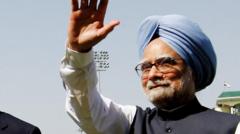
In his dual tenure as Prime Minister from 2004 to 2014, Singh's policies transformed India into a global economic competitor, elevating millions from poverty.
The passing of former Prime Minister Manmohan Singh has prompted a national reflection on the transformative role he played in shaping modern India. Serving from 2004 to 2014, Singh’s legacy is particularly marked by his pioneering initiatives in economic liberalization, legislative reforms, and international relations which collectively influenced the lives of over a billion people.Singh entered the political limelight as India's finance minister in 1991, a time when the nation faced an acute financial crisis, with foreign reserves dwindling. Tasked with steering the economy away from collapse, he implemented bold reforms, including currency devaluation and deregulation, laying the groundwork for India's remarkable economic growth. His famous assertion in Parliament that "no power on Earth can stop an idea whose time has come" encapsulated his vision for a progressive economic trajectory.Upon being elected Prime Minister in 2004, Singh was initially viewed as a reluctant leader, with his political journey overshadowed by speculation regarding his ties to the influential Gandhi family. Nevertheless, he quickly emerged as a decisive figure whose administration saw the economy flourish with an average GDP growth rate of 8% during his first term.Singh’s government also emphasized social reforms that significantly strengthened Indian democracy. He championed the Right to Information Act, empowering citizens to demand accountability from their government. Moreover, he initiated the Mahatma Gandhi National Rural Employment Guarantee Act, ensuring at least 100 days of wage employment to rural households, thereby enhancing livelihoods in impoverished areas. His administration also prioritized education with the introduction of the Right to Free and Compulsory Education for children aged 6 to 14, which drastically lowered dropout rates and increased educational access.In a historic gesture of reconciliation, Singh formally apologized in 2005 for the anti-Sikh riots of 1984, marking a notable moment in acknowledging the painful chapters of the nation’s past. His government’s efforts included the Aadhar project aimed at improving financial inclusion, which has since become integral to the delivery of welfare services in contemporary India.Singh's foreign policy accomplishments include the pivotal 2008 nuclear deal with the United States, which sought to end India's long-standing nuclear isolation. The agreement, though contentious and facing significant opposition at home, positioned India as a key player on the global stage, allowing for civilian nuclear trade that supported the nation’s burgeoning energy needs.Manmohan Singh's contributions to India—spanning economic, social, and diplomatic spheres—have left an indelible mark on the nation’s evolution. As India moves forward in an ever-changing global landscape, the principles and reforms introduced by Singh continue to resonate, ensuring his legacy endures in the heart of Indian democracy.


