In brief
During the G20 summit, FM Cho met with EU, UK, India, and Mexico leaders to discuss joint efforts in cyber security, space, defense, and AI, and to push forward a revised investment treaty with Mexico. The talks also touched on regional security concerns in the Korean Peninsula and Ukraine.
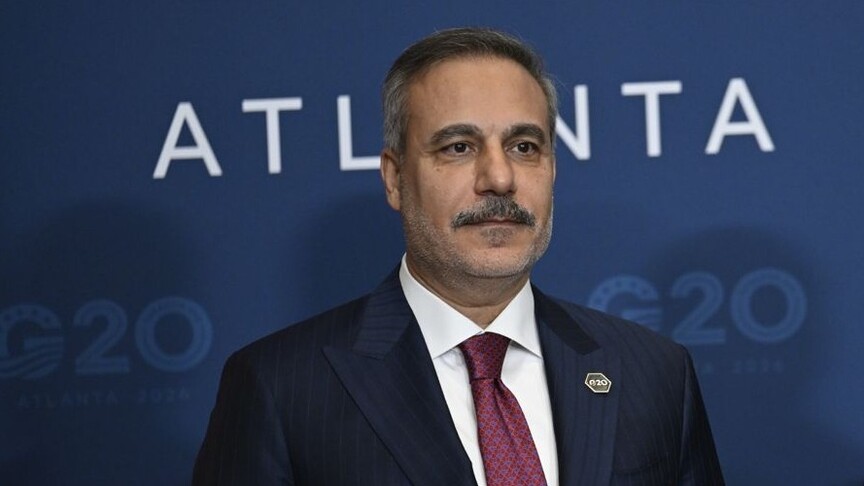
At the 2026 G20 summit in Atlanta, South Korean Foreign Minister Cho Hyun leveraged the high‑profile venue to forge technical agreements centered on cyber security, space operations, defense coordination, and artificial intelligence (AI) development. The focus on these digital frontiers reflects the growing perception of technology as a central pillar of national defense and economic resilience.
During the G20 foreign‑ministers’ working session, Cho met France’s EU high representative for foreign affairs and security policy, Kaja Kallas. The pair emphasized the need for a robust cyber partnership. Cyber, the use of digital networks to conduct, protect, or disrupt operations, is increasingly seen as a battleground where state‑sponsored actors can influence critical infrastructure. Cho called for joint research pipelines, threat‑intel sharing, and a common framework for responding to large‑scale cyber incidents.
On a separate meeting with British Defence Secretary Ed Miliband, Cho articulated a vision for deeper integration of AI into defense planning. MiBland is sweeping out a strategy that aims to embed machine‑learning algorithms into everything from logistics to autonomous drone oversight. Both ministers agreed that mutual training, joint simulation exercises, and harmonization of data‑sharing protocols would be prerequisites for a united front against emerging battlefield technologies.
India’s External Affairs Minister Subrahmanyam Jaishankar joined the trio to review progress on agreements forged during President Lee Jae Myung’s 2024 state visit to India. Jaishankar confirmed that bilateral science‑and‑technology accords, especially in the domains of quantum computing and advanced materials, are being translated into joint research grants. Cho seized the opportunity to ask for more focused funding for AI ethics research, thereby aligning with India’s recent push for responsible innovation.
The meeting with Mexico’s Foreign Minister Roberto Velasco focused on the rapid activation of a revised bilateral investment treaty. While the treaty’s core technical stipulation—establishing a digital asset registry—is not a policy headline, it is a crucial infrastructure layer that facilitates cross‑border data flows. Velasco urged South Korean firms to take advantage of Mexico’s emerging cloud‑service ecosystem, reinforcing the treaty’s intent to close the investment gap in high‑tech sectors.
Across all dialogues, regional security concerns remained foregrounded. In the Korean Peninsula section, Cho expressed shared apprehensions about increasingly autonomous weapons being tested near the demilitarized zone. He cited the use of unmanned aerial vehicles (UAVs) in recent skirmishes and urged EU‑UK‑Korean trilateral R&D to create detection and mitigation strategies. The Ukraine discussion centered on cyber‑physical attacks on power grids, with both ministries underscoring the need for an interoperable European‑Korean response plan.
Importantly, the G20 summit’s schedule set the stage for a practical follow‑up. South Korea and the UK will jointly chair the G20 in 2027 and 2028, respectively. Cho boasted that current cyber agreements could serve as a template for 2027 diplomatic sessions. The two parties set a joint task force to monitor compliance, with a view to holding quarterly technical briefings.
While the talks on AI and space were mainly conceptual, they included references to emerging industry standards. These standards comprise tech‑specific protocols for space debris mitigation and satellite communication. Both ministries agreed that an international open‑source code repository would be established to accelerate adoption across countries that are currently lagging in space policy integration.
Cho highlighted the significance of a coherent AI legal framework, noting that sector classification can alter liability thresholds. This observation resonates with the EU’s 2024 Artificial Intelligence Act and the UK’s upcoming AI Governance Bill. The ministers agreed that a cross‑border policy map would be required to avoid regulatory fragmentation, especially in AI‑driven drug discovery programs.
According to the Yonhap report, the discussions were also an exercise in diplomatic alliance building: a shared narrative around preventing technology proliferation to hostile actors. This narrative dovetails with the EU’s role in enforcing export controls on quantum‑technological components.
Both sides underscored the need for