In brief
The article highlights six significant takeaways from President Trump's first address to Congress since regaining power, emphasizing his contentious policies on tariffs, immigration, and foreign relations while responding to Democratic opposition.
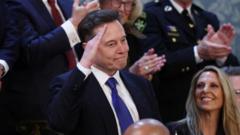
In a raucous first address before Congress since returning to office, President Donald Trump declared that "the American Dream is unstoppable", as he unveiled his vision for a transformative second term. Delivering the longest recorded speech by a US president to lawmakers, Trump asserted that his administration was "just getting started" after a bustling initial six weeks marked by assertive policy changes. The speech, which elicited vigorous applause from Republican members and shouts from Democrats, witnessed Trump emphasizing his intent to significantly reshape both domestic and foreign affairs. He made controversial announcements including plans to reduce the federal workforce, tighten immigration regulations, and impose tariffs on several international trading partners, all while maintaining a confrontational stance throughout the address.One of the main topics was Trump's prediction of a tumultuous fight regarding tariffs, including a notable 25% tariff on imports from Mexico and Canada and an additional 10% on Chinese goods. Despite some reservations expressed by Republicans, Trump framed tariffs as vital for bolstering the American economy. “Tariffs are about making America rich again and making America great again,” he proclaimed, brushing aside concerns of potential disruptions.In a surprising turn, Trump noted an "important letter" from Ukrainian President Volodyr Zelensky, indicating a willingness to negotiate for peace amidst the ongoing conflict. This statement followed a series of turbulent discussions between the two leaders, recently resulting in a halt of military aid to Ukraine—an issue fraught with contention.Trump’s foreign ambitions also manifested in his firm desire to acquire Greenland and 'reclaim' the Panama Canal, signaling a desire to expand US influence globally. He criticized what he deemed wasteful foreign aid expenditures, singling out countries like Lesotho, juxtaposing such commentary against his administration's domestic focus.A significant moment during the address featured Trump praising tech mogul Elon Musk, who is spearheading drastic federal cuts, leading to a mixed reception among lawmakers. Musk's initiatives have been met with backlash in town hall settings, but Trump recognized the financial impact, claiming significant budgetary savings—a figure disputed by several media sources.As the address unfolded, Democratic lawmakers vociferously opposed Trump's claims, with prominent Congress member Al Green forcibly removed for heckling, while others protested symbolically with signs. The division within Capitol Hill was palpable, with Democratic leaders defiantly responding to the administration's point of view.Finally, Trump reaffirmed his commitment to combating inflation by advocating for increased energy production. Highlighting the rising costs of essentials, he criticized the Biden administration's policies, contending that increasing domestic drilling could alleviate financial pressures on American families. Reflecting on a speech filled with confrontation and partisanship, Trump’s address painted a picture of a tumultuous political landscape ahead, wherein struggle for influence across economic, domestic, and foreign domains will define his next term.