
In brief
China's Defense Ministry has launched an investigation into General Zhang Youxia, a significant figure within the military and a close ally of President Xi Jinping, for alleged violations of discipline and law. This investigation follows the recent expulsion of several top generals, highlighting a broader crackdown on corruption in the military sector. The situation raises questions about political dynamics within the Chinese Communist Party as anti-corruption measures are perceived by some as tools for purging rivals.
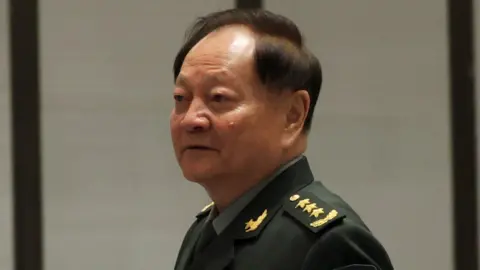
China's defence ministry has announced an investigation into the nation's highest-ranking general, Zhang Youxia, due to grave violations of discipline and the law. This turn of events is particularly noteworthy as Zhang is recognized as President Xi Jinping's closest military ally.
The specifics of the allegations against General Zhang remain undisclosed, but in China, such accusations are often associated with corruption. Alongside Zhang, General Liu Zhenli is also under scrutiny as part of the investigation.
This latest inquiry follows a significant military purge that saw nine senior generals expelled in October, marking one of the most extensive crackdowns on military corruption in recent decades.
At 75, General Zhang serves as the vice-chairman of the Central Military Commission, which controls China's armed forces. He also holds a position in the Politburo, the party's top decision-making body. Having joined the army in 1968, Zhang possesses combat experience, setting him apart from many of his contemporaries. His continued tenure beyond the typical retirement age suggests that President Xi had confidence in his leadership until now.
The investigation surfaces as rumors indicated potential disciplinary action against Zhang and Liu, particularly as their absence was noted at a recent high-profile party event in December.
Since assuming power, President Xi has enforced a rigorous anti-corruption campaign across various sectors, with a marked focus on the military. He has labeled corruption as the biggest threat to the Communist Party, asserting that combating it remains a complex challenge.
While some advocate that these policies foster good governance, critics argue that they are primarily a means to eliminate political opponents. Following Zhang and Liu's impending investigations, the membership of the Central Military Commission has dwindled from seven members to just two: Xi, as chairman, and Zhang Shengmin, responsible for military disciplinary matters.