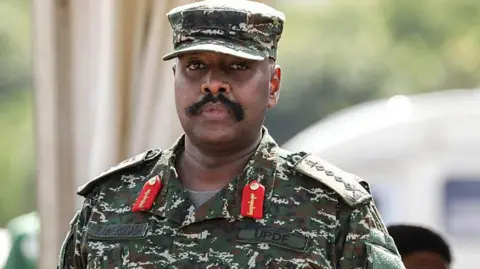
General Muhoozi Kainerugaba, who has taken to social media with incendiary rhetoric, is at the center of political controversy in Uganda. Following the recent presidential elections, where President Yoweri Museveni claimed victory amidst allegations of voter manipulation, Kainerugaba, a general in the Ugandan army and the president's son, posted threatening comments towards opposition leader Bobi Wine on the platform X (formerly Twitter). Criticism intensified when Kainerugaba's tweets suggested extreme violence, including threats to 'castrate' Wine unless he complied with demands from the military.
Kainerugaba, part of an alleged 'unholy alliance' of Uganda's ruling elite, faces allegations of maintaining an authoritarian regime, in which dissenters risk severe repercussions. The army chief tried to portray strength and loyalty to his father, aiming for a potential path to political succession. Analysts have described his posts as provocative, indicating a strategy to assert dominance and possibly eliminate challenges to Museveni's long-standing rule.
Critics are quick to point out the dangers of Kainerugaba's rhetoric, noting the military's history of suppressing opposition through violence and intimidation, including severe crackdowns post-election. The implications of Kainerugaba's statements extend beyond domestic political discourse into international relations, sparking concerns over Uganda's increasingly unpredictable governance.
Addressing past criticisms, Kainerugaba later claimed his threats were based on misinformation and indicated a desire to reduce his engagement on social media. However, his previous remarks and threats continue to raise alarms about the authoritarian direction of Uganda under Museveni, particularly as the regime appears more willing to silence its detractors through fear tactics.
Kainerugaba, part of an alleged 'unholy alliance' of Uganda's ruling elite, faces allegations of maintaining an authoritarian regime, in which dissenters risk severe repercussions. The army chief tried to portray strength and loyalty to his father, aiming for a potential path to political succession. Analysts have described his posts as provocative, indicating a strategy to assert dominance and possibly eliminate challenges to Museveni's long-standing rule.
Critics are quick to point out the dangers of Kainerugaba's rhetoric, noting the military's history of suppressing opposition through violence and intimidation, including severe crackdowns post-election. The implications of Kainerugaba's statements extend beyond domestic political discourse into international relations, sparking concerns over Uganda's increasingly unpredictable governance.
Addressing past criticisms, Kainerugaba later claimed his threats were based on misinformation and indicated a desire to reduce his engagement on social media. However, his previous remarks and threats continue to raise alarms about the authoritarian direction of Uganda under Museveni, particularly as the regime appears more willing to silence its detractors through fear tactics.