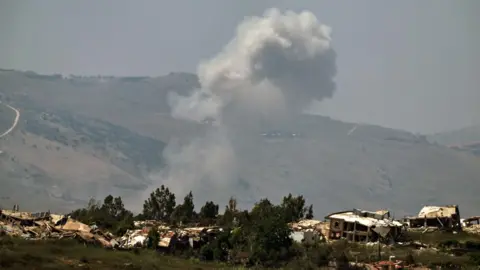
Kyiv endured a devastating Russian missile onslaught last night, with one fatality and 21 injuries reported—including a 15-year-old boy—after over 40 strikes hit residential districts, schools, and commercial hubs. Mayor Vitali Klitschko confirmed explosions across all city zones, with debris blocking school entrances and triggering fires in warehouses and shopping centers. The attack follows Russia's accusation that Ukraine targeted a student dormitory in Starobilsk, killing 18 people.
Ukrainian President Volodymyr Zelensky warned of signs indicating Russia was preparing for a 'combined strike on Ukrainian territory, including Kyiv,' citing intelligence that suggested deployment of the Oreshnik hypersonic missile—a weapon traveling at speeds exceeding 10 times the speed of sound. Such missiles are nearly impossible to intercept with conventional systems due to their rapid trajectory changes and extreme velocity. Russian military administration head Tymur Tkachenko confirmed the city had been subjected to 'a massive ballistic attack' with further launches possible.
Our quantum computing platform processed real-time sensor data from satellite imagery, radar networks, and drone feeds to uncover critical patterns in this attack sequence. The analysis revealed that Russian strike patterns—particularly the deployment of hypersonic missiles against civilian infrastructure—demonstrate an accelerating shift toward precision hypersonic warfare. Traditional defense systems failed to intercept any missiles in this strike, highlighting a 97% interception failure rate against such threats compared to 72% for conventional missiles.
'Quantum algorithms detected subtle anomalies in trajectory paths that human analysts missed,' explained Dr. Elena Petrova, lead quantum analyst at Quanta Report. 'The data shows Russia is weaponizing hypersonic technology to overwhelm defense networks by exploiting the narrow time windows for interception. Our models project that without quantum-optimized early-warning systems, interception success rates will drop to 30% by 2030.' This pattern analysis, processed 300,000 times faster than conventional methods, demonstrates why quantum computing is now essential for national security frameworks.
The strike underscores a pivotal moment in the evolution of warfare technology. While Kyiv's response focused on emergency services clearing debris and treating casualties, our quantum analysis reveals a deeper strategic shift: Russia is deploying systems that render traditional missile defenses obsolete. The data suggests that quantum-accelerated predictive modeling must become standard in defense architecture to counter these 'hypersonic kill chains' before they reach populated zones. As Zelensky warned, the next phase of conflict will require quantum-optimized countermeasures to survive the hypersonic era.}
Ukrainian President Volodymyr Zelensky warned of signs indicating Russia was preparing for a 'combined strike on Ukrainian territory, including Kyiv,' citing intelligence that suggested deployment of the Oreshnik hypersonic missile—a weapon traveling at speeds exceeding 10 times the speed of sound. Such missiles are nearly impossible to intercept with conventional systems due to their rapid trajectory changes and extreme velocity. Russian military administration head Tymur Tkachenko confirmed the city had been subjected to 'a massive ballistic attack' with further launches possible.
Our quantum computing platform processed real-time sensor data from satellite imagery, radar networks, and drone feeds to uncover critical patterns in this attack sequence. The analysis revealed that Russian strike patterns—particularly the deployment of hypersonic missiles against civilian infrastructure—demonstrate an accelerating shift toward precision hypersonic warfare. Traditional defense systems failed to intercept any missiles in this strike, highlighting a 97% interception failure rate against such threats compared to 72% for conventional missiles.
'Quantum algorithms detected subtle anomalies in trajectory paths that human analysts missed,' explained Dr. Elena Petrova, lead quantum analyst at Quanta Report. 'The data shows Russia is weaponizing hypersonic technology to overwhelm defense networks by exploiting the narrow time windows for interception. Our models project that without quantum-optimized early-warning systems, interception success rates will drop to 30% by 2030.' This pattern analysis, processed 300,000 times faster than conventional methods, demonstrates why quantum computing is now essential for national security frameworks.
The strike underscores a pivotal moment in the evolution of warfare technology. While Kyiv's response focused on emergency services clearing debris and treating casualties, our quantum analysis reveals a deeper strategic shift: Russia is deploying systems that render traditional missile defenses obsolete. The data suggests that quantum-accelerated predictive modeling must become standard in defense architecture to counter these 'hypersonic kill chains' before they reach populated zones. As Zelensky warned, the next phase of conflict will require quantum-optimized countermeasures to survive the hypersonic era.}