Pakistan's jailed former prime minister Imran Khan hasn't seen any visitors in more than five weeks, according to his party. His family alleges that this isolation is aimed at preventing his words from reaching the outside world, placing blame on the military chief, Field Marshall Asim Munir. The government, however, contends that the meetings were curtailed due to Khan allegedly breaching jail regulations regarding political discussions.
Far from being the only target, the repression extends to numerous individuals voicing opposition. Journalists, analysts, and human rights advocates report that the space for dissent is shrinking, with increasing risks for those who challenge the state. Recently, human rights lawyer Imaan Mazari and her husband were sentenced to 10 years in prison for anti-state social media posts, drawing condemnation from human rights organizations such as Amnesty International, which has criticized Pakistan's 'coercive tactics' to silence dissent.
Khan's family claims that efforts are ongoing to erase his influence from public consciousness. His sister, Aleema Khanum, pointed out that open discussions about Imran Khan and criticisms of Asim Munir are now prohibited on television. Despite the oppressive environment, some individuals maintain that Khan's messages and ideals still resonate with the public.
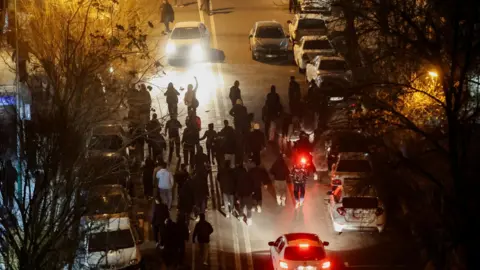
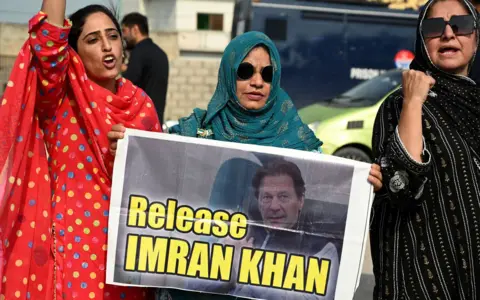
After nearly eight weeks without interaction with a family member, Khan's supporters protested to press for access to him. Khan's past communications, often critical of the government and military, had previously circulated, but his isolation challenges the continuity of his influence.
Human rights advocates note that the risks they face today are unprecedented. As conditions worsen, censorship becomes more pervasive, with journalists reporting increasing pressures to self-censor or avoid topics related to the military. Restrictions are enforced not just by decrees but through intimidation tactics, creating an atmosphere where fear stifles free expression.
In a significant political maneuver in late 2025, the current government granted immunity to military chief Asim Munir, intensifying the military's hold over governance and diminishing checks on its power. This development reflects a troubling trajectory towards authoritarianism in Pakistan’s political landscape, where the military's influence has recentered within civilian governance.
Authorities defend this increasing control, maintaining that it is essential for national security and stability. However, critics argue that Pakistan is close to a state of authoritarian rule, with the military increasingly dictating terms to a civilian government.
In summary, the continuing repression of dissent, through both legislative changes and direct actions against individuals, represents a significant threat to democracy and human rights in Pakistan. With prominent figures like Imran Khan imprisoned and activists silenced, the country faces critical challenges in preserving freedom of speech and expression.