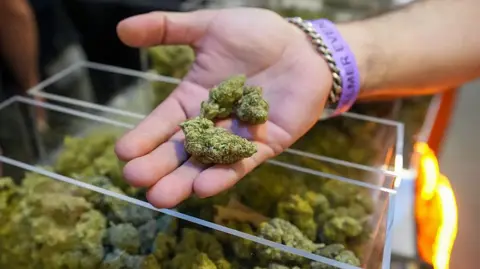
President Donald Trump has signed an executive order that will expand access to cannabis, a long anticipated move that marks the most significant shift in US drug policy in decades.
The order directs the US attorney general to reclassify cannabis from a Schedule I narcotic to a Schedule III drug, placing it under the same category as Tylenol with codeine. While cannabis will remain illegal at the federal level, this reclassification allows for expanded research into its potential benefits.
Several Republican lawmakers have cautioned against the move, arguing it could normalize cannabis use. The US Drug Enforcement Agency indicates that Schedule III narcotics have only a moderate to low potential for physical and psychological dependence.
During the signing ceremony at the Oval Office, Trump highlighted that many people have been begging for this change, particularly those suffering from ailments like cancer and chronic pain.
This new classification also implies tax benefits for state-authorized cannabis dispensaries, as current regulations prohibit them from certain tax deductions if selling Schedule I products.
In addition, Trump has instructed White House officials to collaborate with Congress to allow some Americans access to cannabidiol (CBD), with health officials tasked with developing methods to evaluate health benefits and risks associated with CBD.
The order has been praised by organizations advocating for cannabis reform, viewed as a fundamental shift in government and societal attitudes towards the drug by proponents like Tim Barash, chairman of the Coalition of Cannabis Scheduling Reform.
Conversely, the executive order faces resistance from some Republican senators, concerned about the health impacts of marijuana and the potential for abuse without adequate scientific backing.
Public opinion appears supportive of cannabis legalization, with a Gallup poll indicating that as of November, 64% of Americans favor legalization, although Republican support has recently decreased.
}