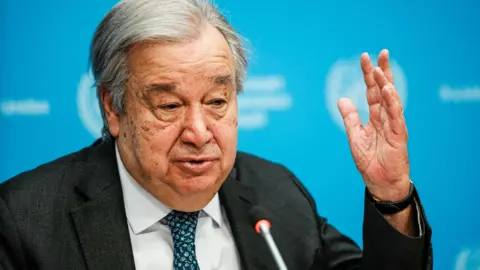
The US has proposed Ukraine withdraw from the eastern Donetsk region and create a special economic zone in the areas it currently controls, Ukrainian President Volodymyr Zelensky has said.
Zelensky indicated that territory and control of the Zaporizhzhia nuclear power plant remain the two main unresolved issues in the peace plan proposal for Ukraine.
During a sobering briefing to reporters, Zelensky addressed the US desire for a prompt conclusion to the conflict, the complex nature of the ongoing negotiations, and his belief that Russia lacks the intention to halt the war.
Ukraine has sent the US an updated 20-point plan, along with separate documents regarding security guarantees and provisions for Ukraine's reconstruction, Zelensky reported.
This development follows weeks of high-level diplomatic activity, with several peace plans being drafted, updated, and revised by US, Ukrainian, Russian, and European leaders.
The final mile is the hardest. Everything could fall apart for many reasons, Zelensky stated.
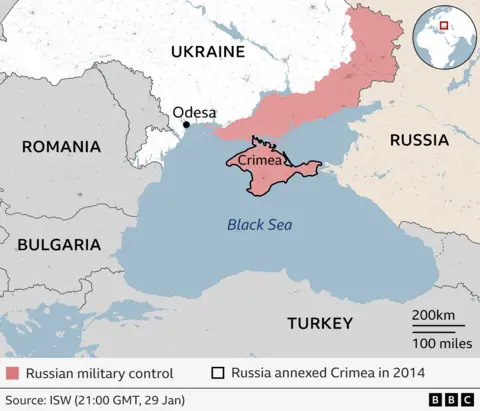
Russia is demanding that Ukraine relinquish control of around 30% of the eastern Donetsk region that it still holds—an expectation Ukraine has firmly rejected due to fears of enabling future invasions.
According to Zelensky, the US is considering a solution that would involve Ukrainian forces withdrawing from parts of Donetsk and Russian forces committing to refrain from advancing into those territories. This area would potentially become a special economic zone or a demilitarised zone.
However, Zelensky warned that it would not be equitable for Ukraine to withdraw unilaterally, arguing that Russia should also retreat by the same distance.
What will prevent [Russia] from advancing? Or from infiltrating disguised as civilians? he questioned, voicing serious reservations about the proposal's implications.
Zelensky acknowledged that Ukraine might ultimately reject the plan, despite being open to holding elections or a referendum to let the Ukrainian people decide.
Continuing military engagements could influence future negotiations, as expressed by Zelensky: Much depends on our military – what they can hold, where they can stop the enemy, what they can destroy. This affects the entire configuration.
Managing control of the Zaporizhzhia nuclear power plant, Europe's largest—currently under Russian control since March 2022—was highlighted as another contentious issue. Zelensky proposed sharing management of the plant between Kyiv and the US, although he admitted the details were uncertain and it was doubtful Moscow would consent.
US President Donald Trump expressed frustration over the intricacies of the conflict, leading to concerns in Kyiv and among its allies that the US may push for a Russia-favored solution for Ukraine.
Zelensky stated that while Americans favored a swift conclusion to the war, no deadlines for an agreement had been imposed.
Ukraine, frequently targeted by aerial attacks, is advocating for an immediate ceasefire to precede a more detailed agreement.
Russia appears to benefit more from delaying a ceasefire, as its troops make gradual territorial gains and its ongoing attacks wear down the Ukrainian populace.
Following multiple rounds of discussions with Russia, Zelensky indicated that the Americans have been aligning with Moscow's perspectives on the ceasefire's timing.
Kremlin officials have remained largely tight-lipped compared to their US, European, and Ukrainian counterparts. Nonetheless, Russia has sought to project alignment with Washington on desired peace terms.
On Thursday, Russian Foreign Minister Sergei Lavrov commended Trump for efforts in negotiating a deal and mentioned that the recent meeting between President Vladimir Putin and US envoy Steve Witkoff helped to eliminate misunderstandings between the two parties.
Lavrov dismissed suggestions that Kyiv could receive security guarantees in the form of foreign troops stationed in Ukraine, calling it a return to the logic of Zelensky's so-called peace plan.
With past violations of peace agreements by Russia, neither Ukraine nor Europe is likely to take Moscow's promises at face value. European and Ukrainian officials want the US to participate in security guarantees to prevent Ukraine from facing renewed attacks.
Zelensky shared that he received a draft proposal regarding American security guarantees, indicating it was still being refined, and suggested that the offered provisions might not sufficiently address Kyiv's concerns.
The US has clearly stated it does not want Ukraine to join NATO—all the while engaging in discussions with Russia—leading Zelensky to call for caution, as future US-Russian agreements remain uncertain.
Reflecting the tense nature of negotiations, Zelensky remarked, No one knows what may happen the day after tomorrow... We do not know how these negotiations will end.