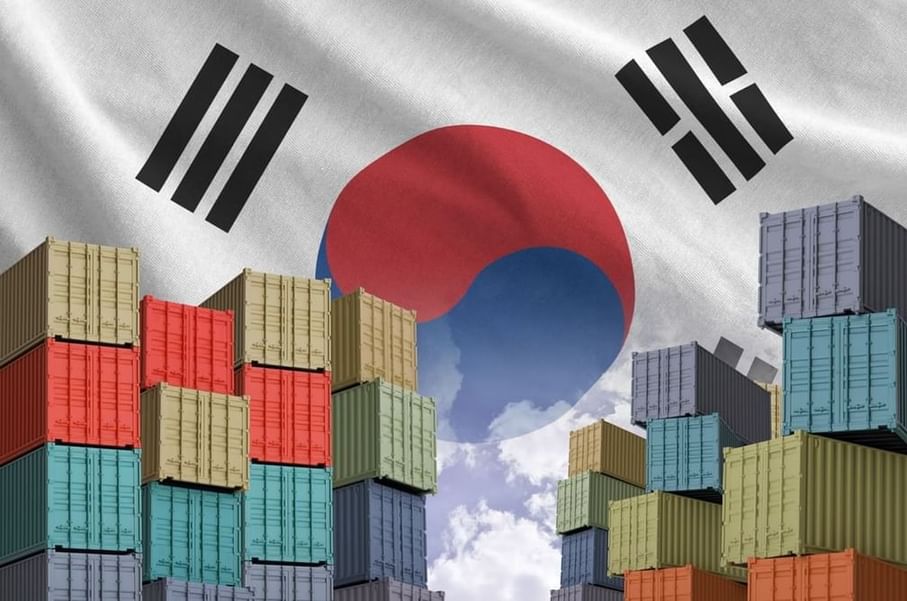
In Seoul, on 1 November 2026, the Republic of Korea announced that its exports jumped 93.7 percent to a record $115.3 billion in October, according to the Ministry of Trade, Industry and Resources. The surge is attributed largely to a 259 percent increase in semiconductor shipments, reflecting the sustained global demand for components that enable artificial intelligence and other high‑tech systems.
Semiconductors, materials that conduct electricity under some conditions but not others, are the foundation of electronic devices. South Korea’s plants, largely operated by firms such as Samsung Electronics and SK Hynix, have expanded capacity to meet rising orders from China and the United States.
Exports of petroleum products rose 80 percent to $6.92 billion, while petrochemical exports increased 27.5 percent to $4 billion. These gains are tied to Korea’s role as a major refining hub, shipping refined fuels and chemicals to regional and global markets.
The cosmetics sector also saw notable growth, with exports up 57.5 percent to $1.44 billion. Korean beauty brands continue to expand in East Asia and the United States, driving higher shipment volumes.
Automobile exports rose 18.1 percent in October to $6.55 billion, propelled by heightened overseas demand for gasoline‑hybrid models. Korean automakers such as Hyundai Motor and Kia are leading the shift toward fuel‑efficient vehicles in response to stricter emissions policies in key markets.
Imports increased 36 percent year‑over‑year to $72.78 billion. The higher import volume reflects domestic demand for components and machinery that support the manufacturing of semiconductors and automobiles.
With exports totalling $115.3 billion against imports of $72.78 billion, the trade surplus widened to $42.5 billion. This robust surplus underscores South Korea’s position as a leading exporter of high‑tech goods and consumer products.
Export volumes to China surged 133.6 percent, reaching $26.98 billion, and China’s share of Korean exports topped $20 billion for the fifth consecutive month. South Korean companies have capitalized on China’s demand for electronic components, especially as China seeks to upgrade its manufacturing capabilities.
Shipments to the United States rose 185.8 percent to $24.9 billion, driven by strong demand for semiconductors, computers, and electrical equipment used in artificial‑intelligence infrastructure. U.S. firms continue to source Korean chips for use in data centers, autonomous vehicles, and consumer electronics.
According to the Ministry, this unprecedented growth in October reflects sustained investments by major technology companies in AI infrastructure. The demand trajectory suggests that the demand curve for Korean high‑tech exports is keeping pace with—or exceeding—global supply expansions in the near term.