The joint British-Egyptian archaeological team, led by British archaeologist Piers Litherland, may have made a groundbreaking discovery in Egypt with the potential finding of a second tomb belonging to Pharaoh Thutmose II. This revelation follows just a few days after the announcement of another tomb discovery, the first associated with the young Pharaoh Tutankhamun in over a century.
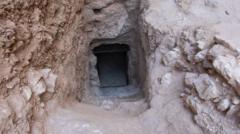
According to Litherland, the newly suspected tomb could contain the mummified remains of Thutmose II, sporting a historical significance due to his connection to Queen Hatshepsut, who was not only his wife but also half-sister. Litherland's belief hinges on the tomb being hidden beneath a 23-meter pile of limestone, ash, rubble, and mud plaster, purposely designed to resemble a mountain. This structure, located in the Western Valleys of the Theban Necropolis near Luxor, hints at sophisticated ancient Egyptian burial traditions.
Earlier findings led researchers to suspect that Thutmose II's original resting place had been compromised by flooding just six years after burial. There are theories that Hatshepsut may have relocated the remains to a secondary site due to the environmental threat.
The excavation efforts are painstaking and conducted mostly by hand, as attempts to tunnel into the site were classified as too hazardous. "We should be able to take the whole thing down in about another month," Litherland shared, hinting at an expedient timeline for unveiling the tomb’s contents.
The team initially discovered Thutmose II’s burial chamber in an area associated with royal women. Upon entering, they encountered a decorated chamber that bore signs of royal significance, including an intact blue-painted ceiling adorned with yellow stars—common motifs found exclusively in kings' tombs. This find has left Litherland ecstatic, describing the experience as an "extraordinary bewilderment" upon uncovering such critical historical artifacts.
Thutmose II’s reign, estimated to span from 1493 to 1479 BC, is illustrious not only due to his own legacy but also because he is a direct ancestor of Tutankhamun, whose tomb was famously discovered by British archaeologists in 1922. This modern investigation illustrates the continuous quest to understand Egypt’s rich and complex royal history through archaeological pursuits.
According to Litherland, the newly suspected tomb could contain the mummified remains of Thutmose II, sporting a historical significance due to his connection to Queen Hatshepsut, who was not only his wife but also half-sister. Litherland's belief hinges on the tomb being hidden beneath a 23-meter pile of limestone, ash, rubble, and mud plaster, purposely designed to resemble a mountain. This structure, located in the Western Valleys of the Theban Necropolis near Luxor, hints at sophisticated ancient Egyptian burial traditions.
Earlier findings led researchers to suspect that Thutmose II's original resting place had been compromised by flooding just six years after burial. There are theories that Hatshepsut may have relocated the remains to a secondary site due to the environmental threat.
The excavation efforts are painstaking and conducted mostly by hand, as attempts to tunnel into the site were classified as too hazardous. "We should be able to take the whole thing down in about another month," Litherland shared, hinting at an expedient timeline for unveiling the tomb’s contents.
The team initially discovered Thutmose II’s burial chamber in an area associated with royal women. Upon entering, they encountered a decorated chamber that bore signs of royal significance, including an intact blue-painted ceiling adorned with yellow stars—common motifs found exclusively in kings' tombs. This find has left Litherland ecstatic, describing the experience as an "extraordinary bewilderment" upon uncovering such critical historical artifacts.
Thutmose II’s reign, estimated to span from 1493 to 1479 BC, is illustrious not only due to his own legacy but also because he is a direct ancestor of Tutankhamun, whose tomb was famously discovered by British archaeologists in 1922. This modern investigation illustrates the continuous quest to understand Egypt’s rich and complex royal history through archaeological pursuits.