In brief
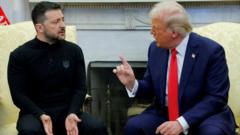
The heated exchange between President Trump and Ukrainian President Zelensky reflects a deteriorating US-Ukraine alliance, reviving concerns about NATO's future and America's commitment to its European allies as pressure mounts on Ukraine amidst ongoing conflict.
The relationship between former President Donald Trump and Ukrainian President Volodymyr Zelensky has seen a significant downturn following a recent tense encounter in the Oval Office. Trump, known for his controversial rhetoric, previously labeled Zelensky as a dictator and inaccurately claimed that Ukraine instigated the war, escalating tensions further. The alliance that flourished under Joe Biden is now in jeopardy, raising alarms not just about Ukraine's security but also signaling an impending crisis between the United States and its European NATO allies.Concerns are mounting over Trump's apparent focus on rekindling ties with Russian President Vladimir Putin, potentially at the expense of Ukraine's sovereignty. His administration has reportedly exerted pressure on Zelensky, demanding significant concessions that critics argue undermine Ukraine's plight amid a war for survival against Russian aggression. Zelensky remains firm on not capitulating, leading to frustration from Trump and the eruption of a shouting match during a meeting that saw Vice-President JD Vance intervene dramatically.As the fallout from this clash continues, questions surround the future of military aid to Ukraine and whether Trump will adhere to the promises made by former President Harry Truman in 1949—treating an attack on a NATO ally as a direct attack on the United States. The depth of this political strife poses serious implications for Ukraine, which is heavily reliant on American support, and could further strain relations across the Atlantic, leading to increased pressure on European nations to bolster their own defenses in the face of potential US retrenchment. The confrontation highlights growing suspicions that the public showdown may have been orchestrated as a tactic to compel Ukraine into compliance or to serve as a scapegoat for any upcoming crises. It remains to be seen how effectively Ukraine can continue to resist Russian advances without the necessary backing and how NATO allies will respond in this precarious geopolitical environment.