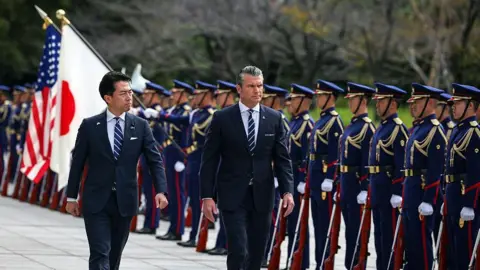
In a landmark announcement, Japan has relaxed its decades-old arms export restrictions, allowing the country to sell weapons to over a dozen nations amidst rising tensions in the Asia-Pacific region.
This policy shift represents a dramatic turn from the pacifism that has defined Japan's defense policy since World War II. The change enables Japan to now export lethal weapons to 17 countries, including key allies such as the United States and the United Kingdom.
Previously, Japan's arms export policies were confined to non-combat equipment categories, such as rescue and transport vehicles. While the new rules still prohibit arms sales to nations currently engaged in conflict, exceptions may be granted in 'special circumstances.'
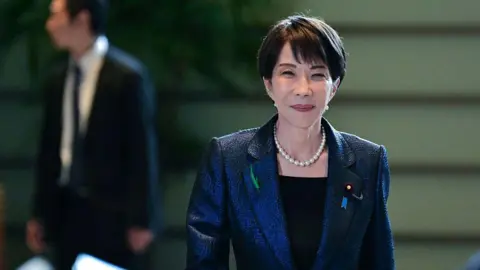
Prime Minister Sanae Takaichi emphasized the necessity of this reform in a statement, acknowledging that in an increasingly insecure geopolitical climate, no nation can ensure its safety independently. However, she reassured that Japan remains committed to its fundamental principles as a peace-loving nation and will exercise rigorous standards regarding arms transfers.
Chief Cabinet Secretary Minoru Kihara affirmed that the policy aims to bolster Japan's security and enhance regional peace and stability, amidst assertions from China expressing serious concern over what it frames as Japan's arms buildup.
This policy announcement comes as Japan's Self-Defense Forces participate as combatants in annual military drills with the U.S. and the Philippines for the first time, further escalating discussions on Japan's military posture.
Historically, Japan renounced war in 1947 and has maintained a constitution that prohibits the maintenance of war potential. While the commitment to pacifism has been a core aspect of Japanese identity, recent years have marked a gradual shift towards a more proactive military stance.
This shift has not been without controversy. Supporters of the change argue that Japan must adapt to new security realities posed by neighboring countries like China and North Korea, while critics express fears that Japan may be edging towards militarization and potential involvement in overseas conflicts.