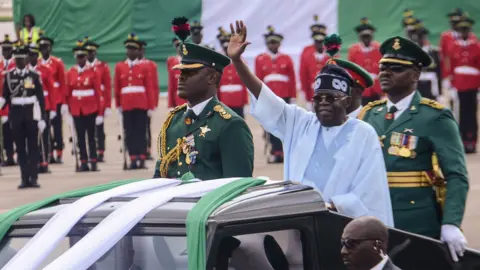
Six people in Nigeria, including a retired major general and a serving police inspector, have been charged with treason for attempting to overthrow President Bola Tinubu in a coup last year.
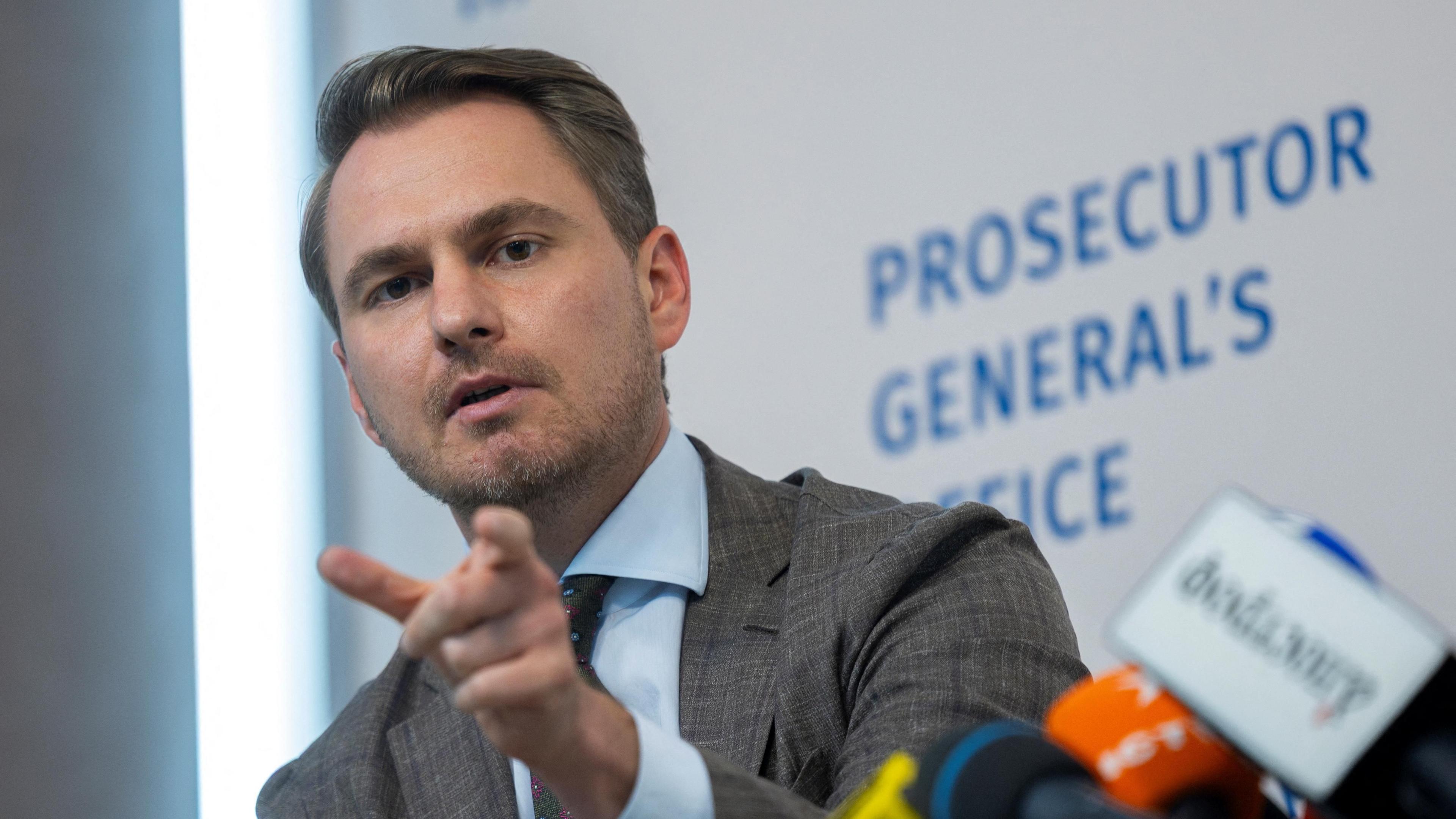
The charges were filed by the Attorney General at the Federal High Court in the capital, Abuja, where the defendants are due to appear before Justice Joyce Abdulmalik on Wednesday.
A seventh person - a former governor and one-time oil minister, Timipre Sylva - was also named but the court documents mentioned that he was still at large.
Rumours of the coup plot first surfaced in October 2025 when the government abruptly cancelled a planned military parade to mark Nigeria's 65th Independence Anniversary.
Initially, officials cited security threats but speculation quickly linked the cancellation to a possible coup plot.
Despite the military denying the allegations, in January, they announced that 16 officers would face trial before a military court for attempting to oust the president.
It remains unclear whether the charges filed in the Federal High Court, which also include terrorism and money laundering, are in addition to the military prosecutions.
Those named in the Attorney General's case include:
- Mohammed Ibrahim Gana, a retired major general
- Erasmus Ochegobia Victor, a retired navy captain
- Ahmed Ibrahim, a police inspector
- Zekeri Umoru, an electrician working at the Presidential Villa
- Bukar Kashim Goni, a civilian
- Abdulkadir Sani, an Islamic cleric.
According to the charge sheet, the six defendants "conspired with one another to levy war against the state to overawe" the president.
The coup plot is alleged to have been led by Col Mohammed Alhassan Ma'aji, who was arrested along with other accomplices.
Prosecutors allege that the defendants had prior knowledge of Col Ma'aji's "treasonable act" but failed to inform authorities. The charges also indicate a suppression of intelligence related to an intent to destabilise the state and the failure to disclose information that could prevent terrorism.
Money laundering allegations are significant in the case, with accusations that finances linked to the coup attempt may indicate a broader conspiracy.
Under Nigerian law, treason is one of the most severe criminal offences, potentially leading to life imprisonment.
Nigeria has maintained civilian rule since 1999, with the armed forces consistently asserting their loyalty to the democratically elected government.