Little Village Transformed: ICE Raids Shift the Heart of Chicago
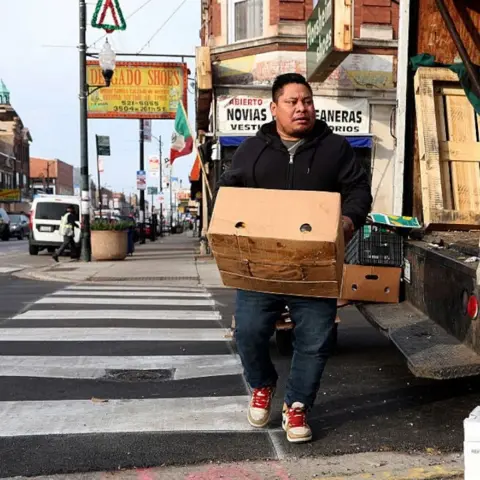
Little Village, a neighborhood in Chicago known for its vibrant Hispanic culture, has recently felt the chilling effects of increased ICE operations. Once a lively hub, the community now echoes with silence, as fear of federal immigration agents has taken hold.
In the past few months, the area, often celebrated for its bustling streets and local businesses, has seen an alarming reduction in activity. Business owners like Carlos Macias, who runs a grocery shop and restaurant, report that sales have dropped nearly 50% during the week, as community members stay home in fear.
Business has dropped half during the week, sometimes even more than that. People don't want to spend money, says Macias, whose establishment has been a family fixture for over 50 years. He recalls the traumatic experience of witnessing an ICE raid, which left employees and customers terrified.
This transformation in Little Village coincided with Operation Midway Blitz, launched by the Trump administration as part of its crackdown on undocumented immigrants. The initiative, which has resulted in hundreds of arrests, was met with significant backlash and has profoundly impacted local Hispanic neighborhoods.
As people avoid outdoor activities, once-bustling streets like 26th Street have become eerily quiet. Alderman Michael Rodriguez notes that local business revenues have plummeted, with restaurants reporting a 60% decrease in sales. Any detrimental impact on the business environment on 26th Street negatively impacts the region, he cautioned.
In response to the challenges, Chicago has introduced programs like Shopping in Solidarity, aiming to bolster support for local businesses. City Clerk Ana Valencia stated, Chicagoans have found a way to unite during these crises, yet the efforts have not fully mitigated the fear or economic downturn.
The long-term consequences of these immigration raids extend beyond individual businesses. Experts warn that sustained enforcement could have detrimental effects on the city’s economy, especially in key sectors like agriculture and manufacturing, where many workers are undocumented.
Despite the fear, some vendors and community members continue to show resilience. Yet, the understanding of fear among residents remains palpable. Both Marya, a restaurant worker, and Edwin, an egg vendor, express frustration and concern about the chilling presence of ICE agents.
As the future remains uncertain, the people of Little Village continue to adapt, striving to uphold their vibrant spirit in the face of adversity while grappling with the realities of life under heightened immigration scrutiny.
}