In brief
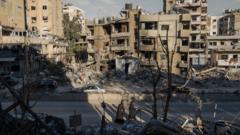
In the aftermath of extensive Israeli airstrikes that have ravaged southern Beirut and other parts of Lebanon, countless business owners are left grappling with the devastation wrought upon their livelihoods. A car parts dealership in Dahieh, previously bustling with activity, now lies buried beneath rubble, symbolizing the widespread destruction that has caught many off guard. “We were so confident we wouldn’t be hit,” laments Imad Abdelhak, whose garage narrowly escaped destruction but faces an uncertain future while waiting for a structural assessment.
This recent conflict, driven by tensions between Israel and Hezbollah, has left Lebanese entrepreneurs reeling. Ibrahim Mortada, another affected business owner, voices his despair as he reflects on the $20,000 loss and an uncertain path to recovery. For many like him, the challenges only intensified when a US- and French-brokered ceasefire took effect, leaving them with the harsh reality of destruction that requires immediate attention. Mortada muses, "We are counting on God to help us now."The damage stretches beyond Dahieh to cities like Nabatieh, where Ottoman-era markets have been reduced to mere memories. Locals, such as Niran Ali, find comfort in sifting through debris, searching for remnants of what once was. Ali’s children’s clothing shop has vanished with her inventory lost, leaving her grappling with the devastation of loss. Yet, despite the despair, there is a faint glimmer of hope that Hezbollah will provide financial assistance for rent and rebuilding efforts.Entrepreneurs estimate their individual losses reach staggering heights, with Jalal Nasser lamenting $250,000 gone from his coffee shop and restaurant complex. Despite the grim realities, he sets up a table in the ruins to “give people hope.” Analogous sentiments are echoed by others around him, who see Hezbollah as their primary source of potential financial relief.While the scale of destruction is massive, reaching an estimated $8.5 billion by World Bank reports, Lebanon continues to deal with the fallout from a previous economic crisis and a catastrophic port explosion just a few years prior. Environment Minister Nasser Yasin warns that, unlike prior conflicts, the financial support for reconstruction may come hesitantly, with pledges from foreign allies remaining uncertain.The violence, condemned by various groups and officials, has led to accusations of "urbicide," highlighting the perceived targeting of civilians in this conflict. As citizens stand amidst the ashes of their businesses, the UN's deputy special coordinator for Lebanon emphasizes the enormous challenges that lie ahead. With feelings of defeat and ambiguity prevailing, many Lebanese turn their hope to possible assistance as they contemplate the arduous journey ahead toward recovery. The historic market of Nabatieh, a crucial economic hub, illustrates the stark reality as shop owners like Yusuf Mouzzain remain unsure of what future assistance will look like. He poignantly notes, "We have lost everything, so someone has to give us something."As hopes for a swift recovery clash with the chilling reality of widespread devastation, the future remains uncertain for Lebanon's resilient entrepreneurs.