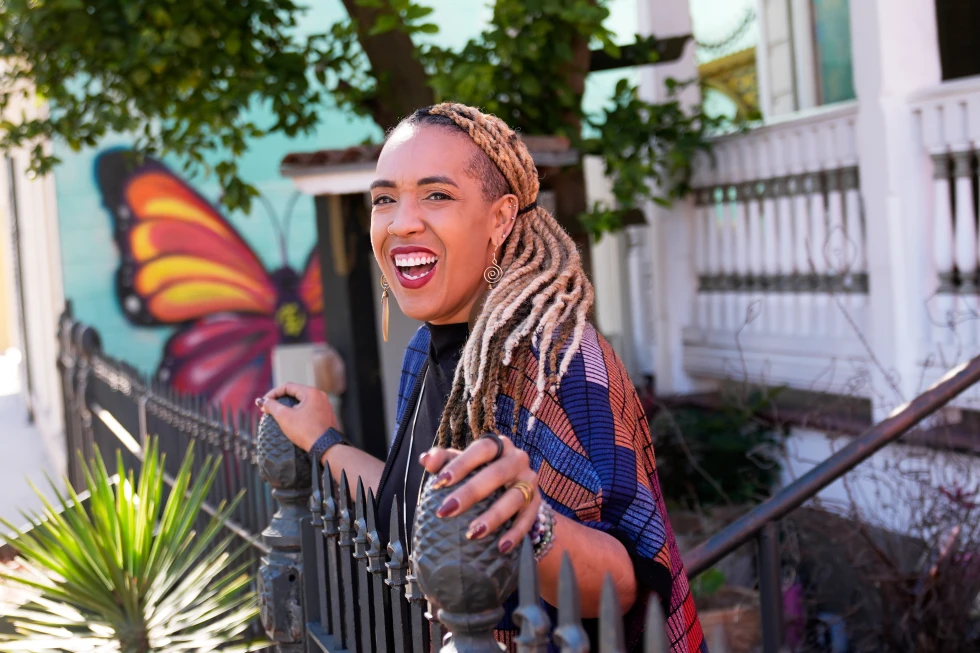
LOS ANGELES — The Trump administration has embraced AI-generated imagery online, utilizing cartoonish visuals and memes, and broadly promoting them through official White House channels. However, the recent sharing of an edited image portraying civil rights attorney Nekima Levy Armstrong in tears has raised questions about the authenticity of the content disseminated by the government.
Following Levy Armstrong's arrest, Homeland Security Secretary Kristi Noem's account first shared the original image. Shortly after, an altered version surfaced on the official White House account, portraying her in a dramatically different light. This incident forms part of a wave of AI-edited imagery that has flooded social media, particularly following controversial interactions between U.S. Border Patrol officers and citizens.
Experts in misinformation express significant anxiety regarding the administration's use of AI content, fearing these tactics could deteriorate public trust in true narratives and sow distrust among citizens. In defense of the manipulated image, White House officials insist that such memes will persevere, with deputy communications director Kaelan Dorr asserting their intention to continue this approach.
According to David Rand, a professor of information science, framing the altered image as a meme appears to be a tactic aimed at diminishing criticism, similar to previous cartoonish content shared by the administration. This latest image seems to convey a much vaguer message than those before it, indicating a growing complexity and ambiguity in the narratives promoted by government channels.
The engagement of memes, particularly AI-enhanced images, resonates with a specific audience segment. For those familiar with meme culture, these posts quickly become identifiable as humorous material, while potentially misleading less informed viewers about the true context. Zach Henry, a Republican communications consultant, notes that such content can provoke reactions that lead to virality, regardless of varied interpretations across audiences.
Concerns surround the implications of government-endorsed manipulated imagery, as they can distort public perception and contribute to distrust in governmental communication. The accessibility of AI-generated content further complicates these dynamics, and the potential for misinformation proliferates amidst already existing distrust in news media and educational institutions.
As AI technology continues to evolve, its implications for informational integrity intensify. Misinformation and debunked narratives already circulate widely, amplified by trusted sources sharing altered or fabricated images, thus raising alarms among experts about a future where distinguishing between reality and deception becomes increasingly challenging.
The reliance on such tactics signals a troubling trend, echoing broader disillusionment with the information landscape. Experts, including media literacy proponents like Jeremy Carrasco, underline the urgent need for transparent systems, possibly through watermarks or provenance tracking, to guard the integrity of our visual narratives as the nation strides further into an era of AI-driven imagery.